Observing Vesak | Reflection, Compassion, and Generosity
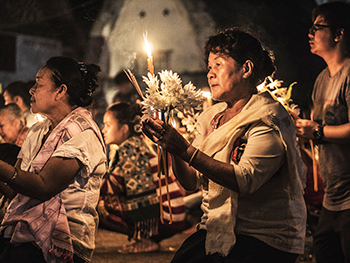
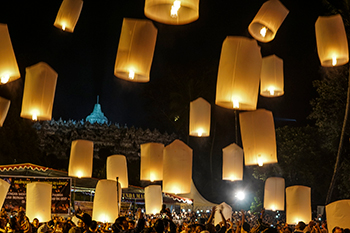
Vesak is celebrated around the world by Buddhist communities through temple visits, meditation, and acts of generosity. Customs vary by country, but many observe the occasion with lanterns, candlelit processions, charitable food offerings, and community gatherings, all centred on compassion, peace, and reflection on the Buddha’s teachings.
Vesak is a very significant Buddhist celebration for Theravda Buddhists (oldest school of Buddhism), and commemorates the birth, enlightenment, and death of Buddha. It is generally observed on the full moon day of the fourth month of the lunar calendar, which usually falls in the month of May in the Gregorian calendar. In instances like this year where May has two full moons, some countries celebrate Vesak on the first full moon day (1st of May) while others celebrate it on the second full moon (31st of May).
Vesak is a public holiday in many South and Southeast Asian countries and is marked by special devotional activities at temples and conducting various meritorious deeds. While presenting food to Buddhist monks is a shared tradition, each country has their own unique practices. In Southeast Asia, it is common practice to bathe the Buddha stature and to release captive birds and fish. In Sri Lanka, Vesak Koodu (lanterns), Vesak Thorans (pandals), and Dansals (charity stalls offering free food and drinks to the community) are key traditions, making Vesak both a deeply religious observance and a celebration of generosity and community spirit.
Although Vesak has become increasingly ritualised and commercialised; Vesak is traditionally a time to reflect on Buddha’s teachings and remind us to be more mindful of our thoughts, desires and attachments. According to Buddhist doctrines, Buddha or Gautama Buddha was born in Lumbini in modern day Nepal as Prince Siddhartha Gautama sometime between 486 and 360 BCE; and renounced his royal life at 29-year-old to live as a wandering ascetic reflecting on human life and suffering. It is said that one day after 6 years of wandering, he gained enlightenment while meditating under a Bodhi tree in Bodh Gaya, India. A sampli
ng of this Bodhi tree was gifted to Sri Lanka by Emperor Ashoka of India around 288 BCE and is now the oldest recorded human planted, living tree in the world. Buddha (meaning ‘the awakened one’) spent the rest of his life sharing the Dharma or teachings on compassion, goodwill and peace and embracing the Middle Path until his passing at the age of 80 in Kushinagar, India.
Buddha’s teachings offer a practical guide (The Noble Eightfold Path) to breaking through repetitive cycles of thoughts, desires, and attachments. The Eightfold Path consists of:
- Right View (Understanding of karma and impermanence)
- Right Intention (Letting go of selfish attachments and desires, replacing anger with compassion)
- Right Speech (abstinence from malicious speech)
- Right Action (Action from a place of compassion and a desire to help others)
- Right Livelihood (Earning a living that does not harm oneself or others)
- Right Effort (Cultivating good mental qualities)
- Right Mindfulness (Cultivating a non-judgemental awareness of the present moment)
- Right Concentration (Cultivating of a focused, calm, and unified mind)
 In essence, Buddhism is a philosophy that focuses on conducting one’s life ethically with wisdom and mental discipline and strives towards inner peace and a happier connected society. So, this Vesak, at a time of widespread conflict and global uncertainty, let us remember Buddhism’s core values of Mettā (loving-kindness), Karunā (compassion), Mudita (vicarious joy), and Upekshā (psychological stability).
“Peace comes from within. Do not seek it without."
(Gautama Buddha)
Contributed by Dulani Abeysinghe, eCALD® Educator, Health New Zealand | Te Whatu Ora