Avurudu | The Sun’s Transition – New Beginnings
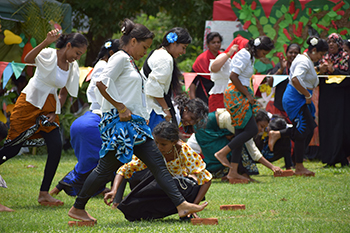
Today, Avurudu is celebrated through a mix of traditional rituals and modern community activities. Families observe auspicious times (nakath), prepare foods such as kiribath, exchange greetings, and honour elders, while communities come together at public and workplace events featuring cultural performances and traditional games. The festival continues to symbolise renewal, harmony, and togetherness.
Did you know Sri Lankan emigration to New Zealand span from the 1860s? In 1901, 106 were recorded as residents born in Ceylon (the former name of Sri Lanka). The numbers remained small until the late 1960s. The demand for skilled professionals in New Zealand as well as decreased social, economic, and political stability in Sri Lanka since the 1970s led to a visible increase in Sri Lankans settling in New Zealand. The 2023 Census records over 23,600 identifying as of Sri Lankan origin. The month of April is a special time of the year for most of them.
Known as ‘Avurudu’ in Sinhala, the Sri Lankan traditional new year falls between the 12th and 14th of April. With astrological origins in India and based on the Hindu solar calendar, Avurudu celebrates the sun’s transition (Sankranthi) from the last Zodiac sign to the first – Pisces to Aries – signifying renewal of life and new beginnings. It is also an agricultural event as it celebrates the end of the Maha (major) rice harvest season in Sri Lanka.
While not celebrated widely in India, this festive season is also observed in some Indian states including Tamil Nadu (Puthandu), Assam (Rongali Bihu), Kerala (Vishu), Odisha (Pana Sankranti), and Punjab (Vaisakhi). It is also the traditional new year in Nepal (Navavarsha) and Bangladesh (Boishakh). The Southeast Asian nations of Thailand (Songkran), Myanmar (Thingyan), Laos (Pi Mai Lao), and Cambodia (Chol Chnam Thmey) also share the same traditional new year, possibly due to cultural exchanges between South and Southeast Asia in the 1st millennium CE (Common Era).
Traditionally, Buddhist and Hindu Sri Lankans will observe time-honoured rituals at astrologically determined auspicious times (nakath) to welcome the new year. The house will be cleaned and traditional sweets prepared on the days leading up Avurudu. They will bathe in water infused with herbs to wash away the bad doings and fortunes of the old year.
The dawn of Avurudu will be welcomed with lighting a hearth and boiling a pot of coconut milk till it overflows. As any good celebration, food is an essential part of Avurudu with a delicious spread of Sri Lankan specialities that is partaken together by the family and shared with neighbours and friends. Although not a religious event, visiting the temple is also an important tradition during Avurudu. Families may travel far and wide to reunite at their ancestral or parental homes over this period. These gatherings often involve a range of traditional Avurudu activities and games. A group of ladies sitting around the Banku Rabanna (a round drum with wooden legs) and drumming Avurudu tunes is a very common sight.
Paying respect to parents and elders by offering betel leaves is a key Avurudu ritual, with the younger generation receiving a monetary gift in return. The oil anointing ritual is another integral ritual which is carried at home by the family elder or at the temple by the head priest and involves anointing herbal oil on the head of others to bring blessings and longevity.
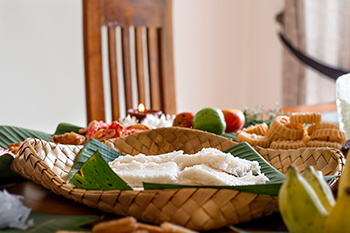
These practices promote gratitude, kindness, togetherness, community, hope for auspicious new beginnings. While observing nakath is near impossible for Sri Lankans living overseas, the spirit of Avurudu is still observed in most households through food. It could be an elaborate spread or just a plate of the simple but symbolic kiribath (coconut milk rice) alongside a flavourful condiment. Kiribath, served at all important moments in life and traditionally the first meal cooked in the new year, symbolises all what Avurudu stands for – abundance, prosperity, and new beginnings.
Avurudu embodies the Sri Lankan cultural identity, and it is a very clear example of the enduring nature of ancient cultures – adaptable and resilient through change
ඔබ සැමට සුභ අලුත් අවුරුද්දක් වේවා!
(Obha saemata subha aluth awurudhdhak wewa!)
Happy New Year to you all!
Contributed by Dulani Abeysinghe, eCALD® Educator, Health New Zealand | Te Whatu Ora